The Human Stories Lost in Bureaucracy And Flawed Justice
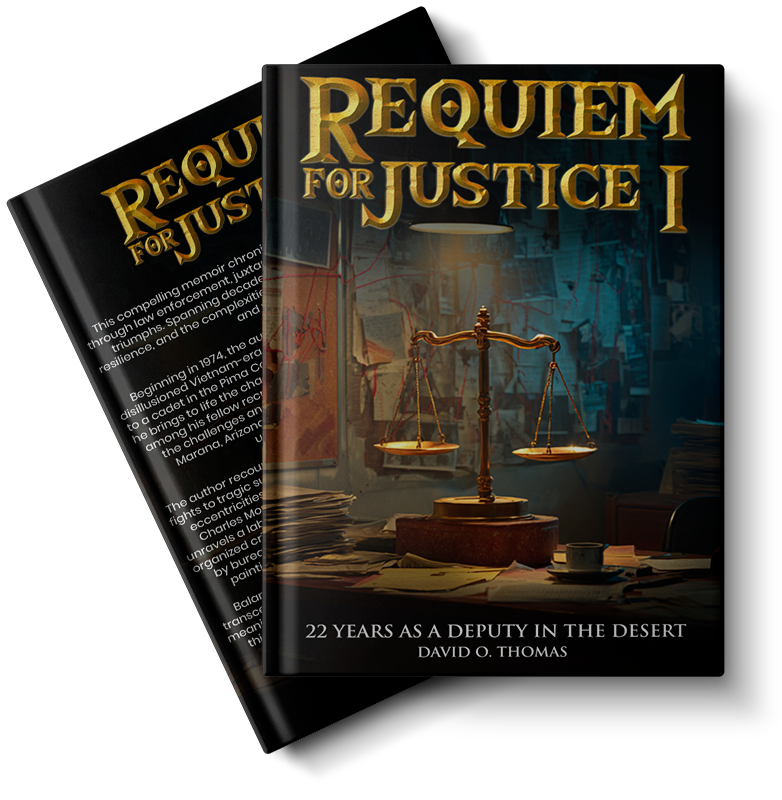
Justice isn’t blind. It’s often bound. In Requiem for Justice I, David O. Thomas offers a searing, firsthand account of how red tape, ego, and politics can twist the very essence of justice. His memoir exposes the uncomfortable truth: sometimes, it isn’t the criminals who destroy faith in the system. It’s the system itself.
Drawing on his decades of experience in the Pima County Sheriff’s Department, Thomas dismantles the illusion of a flawless justice machine. Behind the official reports and press conferences lies a network of inefficiency, cover-ups, and misplaced priorities. His stories reveal what happens when institutions created to serve the public end up serving themselves.
A Requiem for What Justice Should Be
The title itself, Requiem for Justice, feels like a eulogy, not just for a career, but for an ideal. Thomas’s book is a lament for the justice that could have been, one rooted in truth, fairness, and human decency.
He doesn’t write from the bitterness of a cynic but from the heartbreak of someone who believed deeply in the badge. Through his eyes, we see how the system he once trusted begins to unravel under its own contradictions. Every missed opportunity, every ignored warning, every politically motivated decision becomes another verse in this requiem.
Thomas’s narrative makes one thing painfully clear: justice doesn’t die in a dramatic courtroom speech or a single act of corruption. It fades slowly, buried under memos, ego, and indifference.
When Bureaucracy Becomes the Real Culprit
One of the most striking examples Thomas shares is the creation of the “SMART” initiative. A supposedly groundbreaking law enforcement task force launched with much fanfare and little foresight. In theory, it was designed to unite agencies and streamline investigations. In practice, it became a case study in bureaucracy at its worst.
As the author writes, the initiative was “a better claptrap,” an expensive illusion of progress. It promised efficiency but delivered politics. Press releases replaced real results, and public perception became more important than public service.
This isn’t an isolated case. Through anecdotes laced with dark humor, Thomas reveals how often justice becomes secondary to image management. Whether it’s the mishandling of cases, the shielding of incompetence, or the endless blame-shifting between departments, the pattern remains the same: the people meant to enforce justice are often trapped in a web of their own making.
The Cost of Silence
Bureaucracy doesn’t just delay justice, it silences it. For officers who see wrongdoing or incompetence firsthand, speaking up often means professional suicide. Thomas doesn’t shy away from confronting this reality. He writes of colleagues who stayed quiet to protect their careers and of those who dared to tell the truth, only to be met with retaliation or dismissal.
His reflections are sobering but essential. In a system built on hierarchy and protocol, moral courage becomes an act of rebellion. And yet, as Thomas insists, without that courage, justice is little more than a word etched on courthouse walls.
A Call for Transparency and Moral Responsibility
At its heart, the book is not just for those in law enforcement but for anyone who believes in accountability. Thomas doesn’t advocate for perfection; he advocates for honesty. His memoir reminds us that justice isn’t a static institution. It’s a living principle that must be constantly defended from corruption and complacency.
When justice falters, it’s not because we lack laws. It’s because we lack the will to uphold them. Thomas’s voice cuts through the noise of politics and procedure to remind us that the real work of justice begins with individual integrity.
Demand More Than Promises
Demand the truth. The fight for justice isn’t waged in headlines. It’s waged in the hearts of those who refuse to look away. Read Requiem for Justice I by David O. Thomas, an unfiltered look at the failures, the courage, and the humanity behind America’s justice system. Because justice shouldn’t need a requiem, it deserves redemption.