Why Truth Still Matters in a Broken System
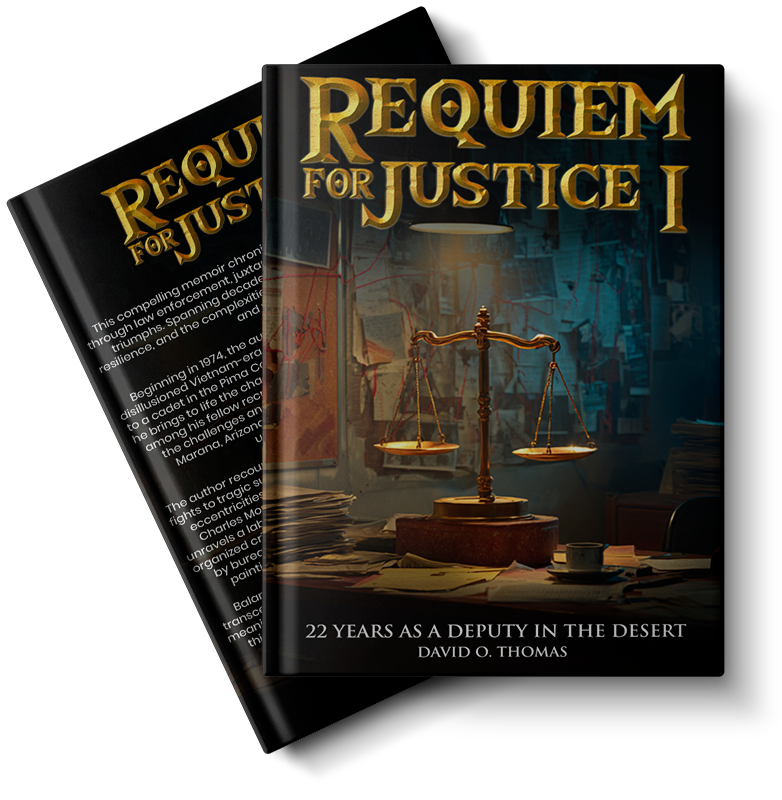
Truth isn’t fashionable, but it’s still vital. Requiem for Justice I by David O. Thomas is not just a memoir. It’s a moral statement. Through true stories, biting humor, and fearless honesty, the author challenges readers to confront uncomfortable realities about crime, corruption, and character.
His voice echoes with authenticity. A voice that refuses to conform, compromise, or conceal. In an age where Truth is often the first casualty, Thomas’s story stands as a reminder that courage begins where comfort ends.
The Purpose Behind Requiem for Justice I
At its core, Requiem for Justice I is a reckoning. A deeply personal exploration of what happens when the justice system strays from its purpose. Thomas, a seasoned law enforcement officer, witnessed both the noble and the negligent sides of policing. His motivation for writing the book wasn’t self-promotion. It was preservation. He sought to preserve the Truth, to document the reality that so often gets buried under bureaucracy, ego, and political agendas.
His memoir isn’t just an account of events. It’s an act of resistance. By telling his story, he refuses to let integrity die quietly. He invites readers into the trenches of real justice work, where victories are fleeting, failures are frequent, and Truth is rarely convenient.
In that sense, the “requiem” in his title isn’t just mourning for a broken system, it’s a call to awaken it.
Why Honesty Is Still a Revolutionary Act
In a profession and a world where image often outweighs substance, honesty can feel like rebellion. Thomas writes with a rare kind of transparency, exposing not only the flaws in law enforcement but also his own vulnerabilities as a man and officer.
He doesn’t hide behind the uniform; he humanizes it. He owns his mistakes, questions his choices, and speaks candidly about the institutional failures he witnessed. That honesty is what gives the book its power.
To tell the Truth in an environment built on control and compliance takes immense courage. And that courage, he shows us, is what real integrity looks like. In his world, silence protects the powerful, but Truth, raw, inconvenient Truth, protects the principle of justice itself.
Storytelling as a Tool of Integrity
Thomas’s storytelling is more than recollection. It’s a revelation. Through bold scenes, dry humor, and heartfelt reflection, he brings readers into the daily contradictions of law enforcement: the weight of authority, the absurdity of politics, and the humanity that survives it all.
Every chapter of Requiem for Justice I feels like a conversation between the ideal and the real. It forces readers to ask: What does it mean to serve justice when the system itself resists it? His stories, some tragic, others comical, become a collection of Truth, stitched together by moral clarity.
In a time when institutions spin narratives and individuals guard reputations, Thomas’s storytelling becomes an act of defiance. He uses words to reclaim what bureaucracy erases, the human cost of corruption, and the personal triumph of staying true.
A Legacy of Truth and Courage
What readers ultimately take away from the book is more than insight into the justice system. It’s an inspiration for personal integrity. Thomas’s journey reminds us that Truth doesn’t need to be popular to be powerful. It only needs to be told.
His legacy is one of transparency and accountability, values that too often get lost in the noise of modern governance. Through his work, Thomas leaves behind a message that surpasses law enforcement: systems may falter, leaders may fail, but individual conscience can still stand firm.
In a world fractured by half-truths and hidden agendas, Requiem for Justice I is a rare thing. It is a book that doesn’t just expose corruption, but rekindles belief in the courage it takes to do what’s right.
Truth Has a Voice And It’s Time to Hear It
Requiem for Justice I by David O. Thomas is a wake-up call. Step inside a world where courage means confrontation, and honesty is the only armor that matters. Get your copy today and find out why Truth still matters, even when the system forgets it.